Browse pollen forecasts for 35 cities — now with allergen risk levels
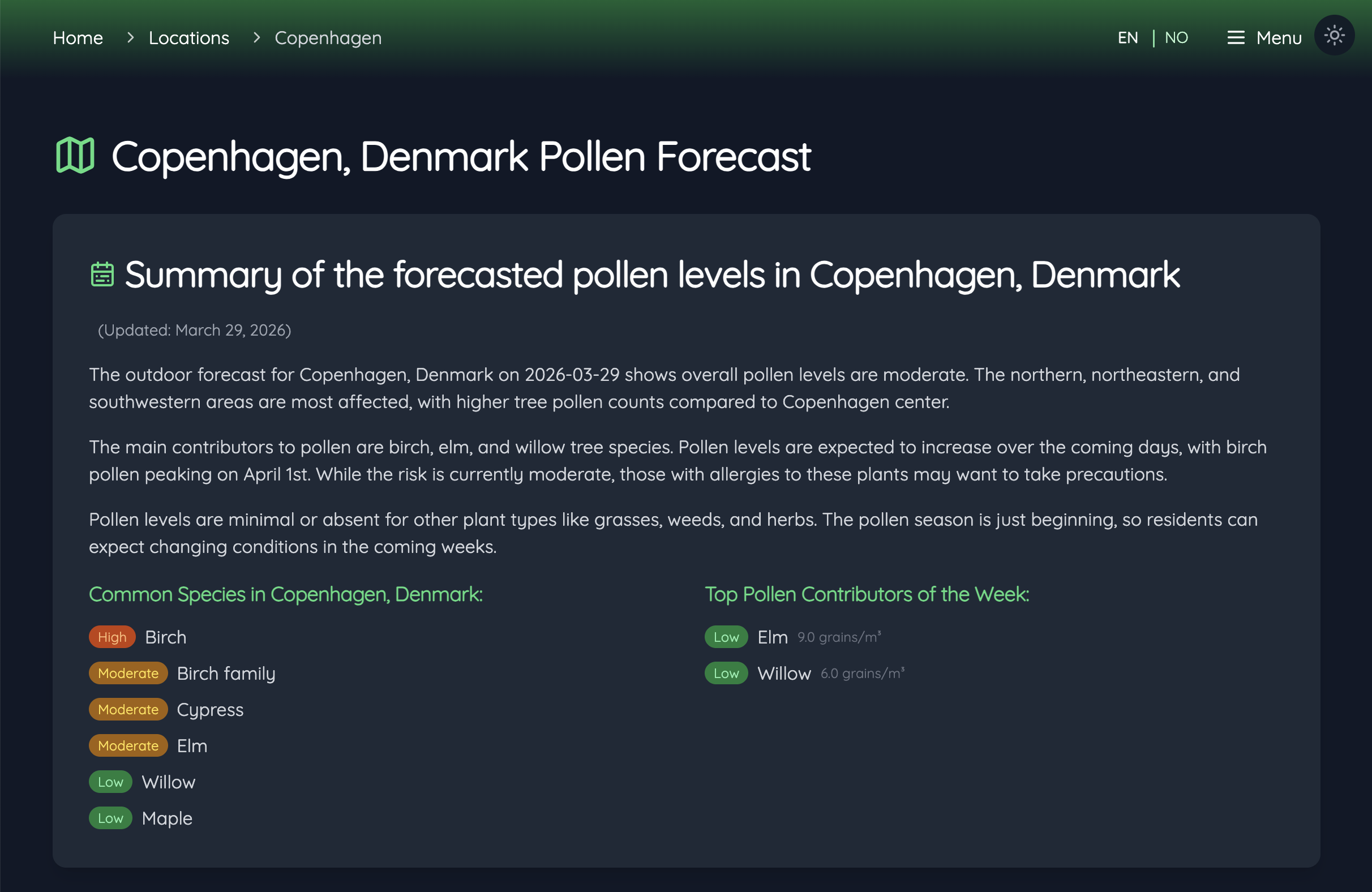
We shipped two updates this week that change how you interact with pollen data on Atmospore: a new locations directory that lets you browse all 35 supported cities at a glance, and color-coded risk badges on every location page so you can see what matters without decoding raw numbers.
Locations Directory
All 35 cities on one page, grouped by country. Find your city in seconds instead of guessing URLs or scrolling through menus.
Risk Level Badges
Every pollen species on a location page now shows a color-coded badge — Low, Moderate, High, or Very High — so you know the impact at a glance.
Translated Species Names
Species names now display in your language. Norwegian users see 'Bjørk' instead of 'birch', 'Furufamilien' instead of 'pinaceae'.
One page, every city
Until now, finding a specific city meant using the navigation dropdown or knowing the exact URL. The new locations page lists every supported city grouped by country — from Bergen to Baton Rouge. Each entry shows whether the city is currently in pollen season, so you can quickly spot where forecasts are most relevant right now.
Risk badges that replace raw numbers
Previously, the species section on location pages showed raw values like 'pinaceae — max 14.0 grains/m³'. Unless you happen to know that 14 grains/m³ of tree pollen means moderate risk, that number is meaningless. Now every species shows a colored risk badge based on established concentration thresholds, with the raw value available as secondary detail for those who want it.
Species names you can actually read
Scientific pollen names like 'pinaceae' and 'salix' are precise but unhelpful for most people. Location pages now display common names — Pine family, Willow — translated into your language. The scientific names were already mapped in our system; we just weren't showing the friendly versions until now.
What's coming next
These updates are part of a larger effort to make Atmospore's data not just accurate, but useful. Here's what we're working on next:
- Trend indicators showing whether each species is rising, stable, or declining over the coming days
- Action guidance based on risk level — concrete recommendations like 'limit outdoor exposure midday' instead of just 'moderate'
- Email alerts before pollen spikes in your city
For developers: all of this is in the API
Everything you see on our location pages — species-level forecasts, risk classifications, 7-day predictions — is available through the Atmospore API. If you're building a health app, smart home system, or environmental monitoring tool, you can integrate the same data into your product.
See API plansWe're a small team building the most accurate pollen forecasting platform we can. If you have feedback on the new features, ideas for what we should build next, or want to collaborate — we'd love to hear from you.
Get in touch